When people hear "Dubai girls," images often flash to luxury cars, designer clothes, or viral videos from beach clubs. But the truth is far richer, quieter, and more powerful than any stereotype. Dubai girls aren’t a monolith. They’re students, engineers, entrepreneurs, artists, athletes, and mothers-each shaping their own path in one of the most dynamic cities on Earth.
Who Are Dubai Girls, Really?
Dubai is home to over 200 nationalities. The term "Dubai girls" includes Emirati women, expats from India, the Philippines, Russia, the UK, and dozens of other countries. Each group lives differently, but they all share one thing: they’re navigating a city where tradition and modernity collide daily.
Emirati women make up just 11% of Dubai’s population, yet they hold 66% of public sector jobs in the UAE. That’s not a coincidence. Since 2010, the UAE government has invested heavily in female education. Today, 70% of university graduates in the UAE are women. Many of them are Emirati girls who grew up in Dubai, went to school in English, studied abroad, and returned to lead tech startups, hospitals, or even space programs.
Take Aisha Al Mansoori. She’s a 28-year-old Emirati engineer who works for the Mohammed Bin Rashid Space Centre. She didn’t need permission to join the program-she applied, got accepted, and now trains astronauts. Her story isn’t rare. It’s becoming routine.
What They Wear-And Why
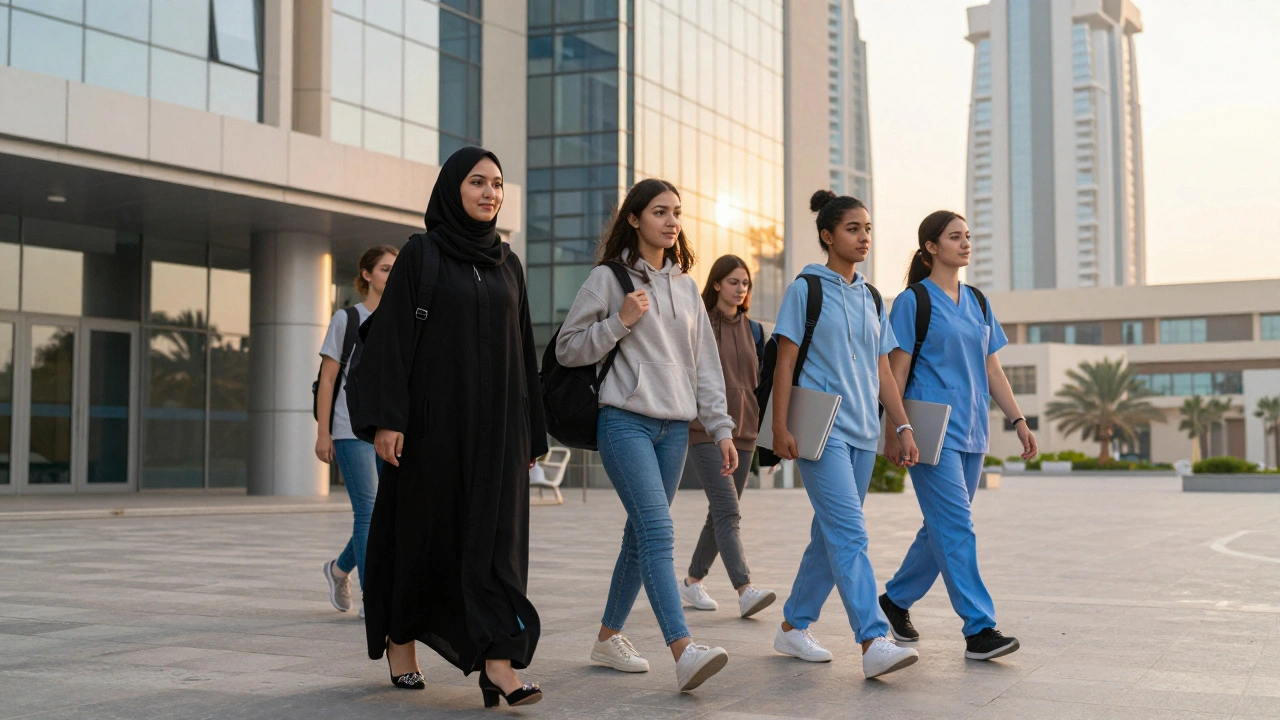
There’s a myth that Dubai girls must wear abayas. That’s not true. In Dubai, you’ll see everything: a young Emirati woman in a tailored abaya with designer heels, a Filipino nurse in scrubs, an Indian student in jeans and a hoodie, or a Russian expat in a crop top at a rooftop bar.
Modesty is personal, not enforced. The law doesn’t require covering up, but many Emirati women choose to wear the abaya as a cultural or religious choice. Others wear Western clothes and still identify deeply with their heritage. It’s not about rules-it’s about autonomy.
One Emirati university student told me: "I wear what makes me feel strong. Some days it’s a black abaya. Other days, it’s my sneakers and a bomber jacket. No one tells me what to wear. That’s the freedom I chose to live in."
Work, Ambition, and the 9-to-5 Myth
Dubai girls don’t sit around waiting for someone else to create opportunities. They build them.
Over 40% of startups in Dubai are founded or co-founded by women. That’s higher than the global average. You’ll find girls running food delivery apps, managing AI labs, leading tourism companies, and even launching their own fashion lines that blend Emirati patterns with streetwear.
Take the case of Layan Al Qassimi. At 24, she launched "Nakheel", a sustainable fashion brand using traditional Emirati embroidery techniques on recycled fabrics. Her designs are sold in Paris, Seoul, and New York. She didn’t wait for a grant. She used Instagram to build a following, then got funding from a Dubai-based venture fund that supports female founders.
Even in male-dominated fields like construction and engineering, women are breaking ground. In 2025, Dubai’s Roads and Transport Authority reported that 32% of its engineers are women-up from 12% in 2015.
Education: The Foundation of Everything
Dubai girls don’t just go to school-they dominate it. The city has over 200 international schools. Many Emirati families send their daughters to elite institutions like the American Community School or Dubai American Academy. But it’s not just about prestige. It’s about access.
Public schools in Dubai now offer robotics, coding, and space science to girls as early as grade 3. The UAE’s National Strategy for Education 2030 explicitly targets gender equality in STEM fields. The result? Girls outperform boys in national science exams by 18%.
At the American University in Dubai, 75% of engineering students are women. That’s not a trend. It’s the new normal.
Family, Freedom, and the Quiet Rebellion
Many assume Dubai girls are trapped by tradition. But the opposite is often true. Family support is strong here-especially when it comes to education and career.
Unlike in some cultures where women are expected to marry young, Emirati women now marry at an average age of 28. Many delay marriage to finish degrees, travel, or start businesses. And families often cheer them on.
One Emirati mother, Fatima, said: "I didn’t want my daughter to be like me-staying home because no one told her she could do more. I told her: ‘Go. Learn. Make mistakes. Come back stronger.’"
That mindset is changing how relationships work. Dating is still private, but it’s not forbidden. Social apps like Bumble and Tinder are used by expat and Emirati women alike. Many relationships now form through shared interests-hiking, coding clubs, or art galleries-not family introductions.

The Hidden Spaces Where Dubai Girls Thrive
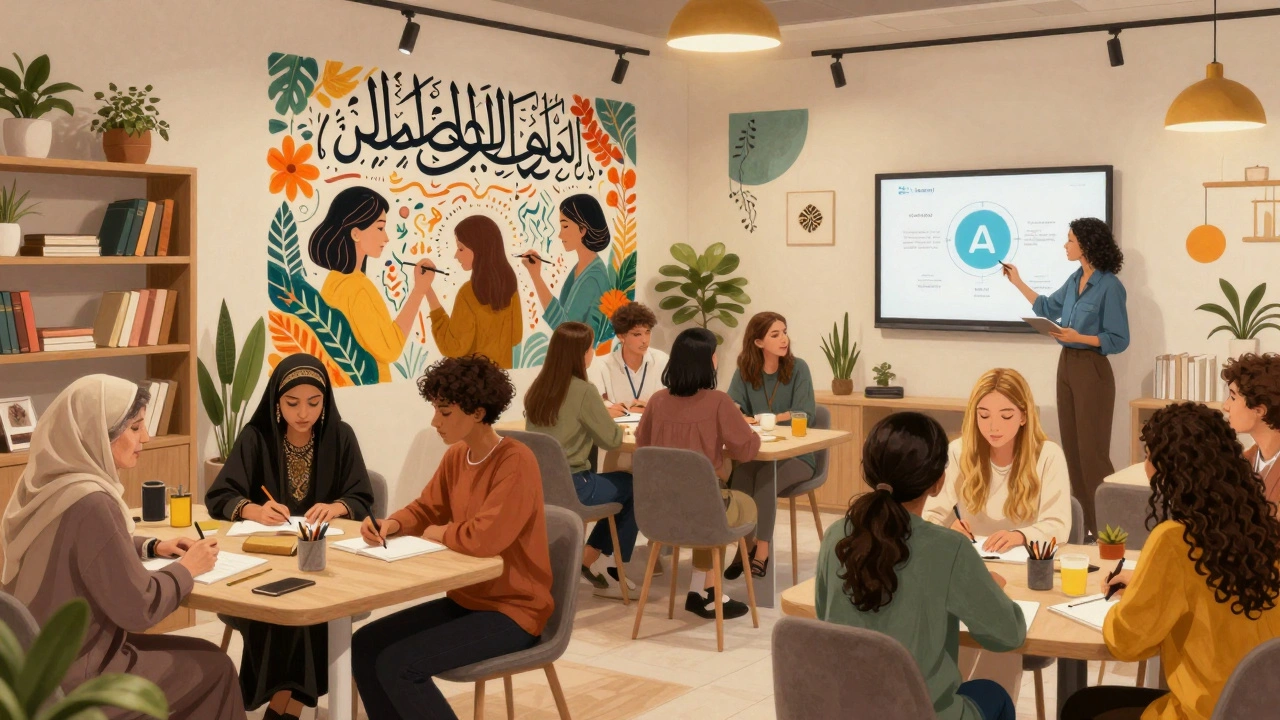
You won’t find them in the tourist brochures. But if you walk into the Dubai Women’s Hub in Al Quoz, you’ll see a different city.
It’s a co-working space, incubator, and community center built by women, for women. Here, you’ll find:
- A 60-year-old Emirati poet teaching creative writing to teenage girls
- A group of Nigerian and Indian nurses sharing tips on navigating Dubai’s healthcare system
- A Ukrainian artist painting murals that blend Arabic calligraphy with feminist slogans
- A young Emirati entrepreneur pitching her AI-powered tutoring app to investors
This is where real life happens-not on Instagram, not in luxury malls, but in quiet rooms where ideas are born.
What’s Next?
Dubai girls aren’t waiting for permission to lead. They’re already leading.
By 2030, the UAE plans for women to hold 50% of leadership roles in government and private sectors. That’s not a goal-it’s a timeline. And Dubai girls are already halfway there.
They’re not symbols. They’re not stereotypes. They’re engineers, artists, CEOs, mothers, athletes, and scientists. They’re the quiet force behind Dubai’s transformation.
If you want to understand Dubai, stop looking at the skyline. Look at the girls walking into classrooms, boardrooms, labs, and startups every morning. That’s where the future is being built.
Do Dubai girls have the same rights as men?
Legally, yes. UAE law guarantees equal rights in education, employment, property ownership, and divorce. Women can own businesses, drive, travel alone, and file lawsuits without a male guardian. In practice, cultural norms vary, but the legal framework is among the most progressive in the region. Emirati women have voted since 2006 and hold seats in the Federal National Council.
Can Dubai girls go out alone at night?
Absolutely. Dubai is one of the safest cities in the world for women traveling alone. Nightlife is active, public transport runs until midnight, and ride-sharing apps are widely used. Many Emirati women go out with friends, attend concerts, or work late shifts without issue. Safety isn’t about restrictions-it’s about infrastructure and policing.
Are Dubai girls pressured to marry young?
Not anymore. The average age of first marriage for Emirati women is 28. Many choose to focus on education or careers first. Families increasingly support this choice. In fact, the government offers financial incentives to couples who delay marriage until after completing higher education.
What do Dubai girls do for fun?
They do everything. From desert camping and scuba diving to attending TEDx talks and running marathons. Many join fitness clubs, book clubs, or coding workshops. Social life is diverse: Emirati girls might spend Friday nights at a family dinner, while expat girls head to rooftop bars or art exhibitions. The key is choice-no one is forced into a single lifestyle.
Is it hard for foreign girls to fit in?
Not if they’re open to learning. Dubai is built for expats. Over 80% of the population is foreign-born. Most communities have their own cultural centers, language groups, and social networks. Foreign girls often find support through work, school, or apps like Meetup. Respect for local customs goes a long way-like dressing modestly in mosques or avoiding public displays of affection.