When you hear "Philippine girls in Dubai," what comes to mind? Maybe images of housekeepers, nurses, or waitresses. But the real story is deeper, richer, and far more varied than the headlines suggest. Thousands of Filipino women live and work in Dubai-not just as employees, but as students, entrepreneurs, artists, and community leaders. Their presence isn't just a footnote in Dubai’s expat story-it’s a defining thread.
Why Do So Many Filipino Women Come to Dubai?
Over 700,000 Filipinos live in the UAE, and nearly 60% of them are women. The numbers aren’t random. The Philippines has one of the highest rates of overseas labor migration in the world, and Dubai is one of its top destinations. Why? Because it offers something other countries don’t: stable income, legal protections, and a relatively safe environment for single women.
Many start as domestic workers, drawn by salaries that are 5 to 10 times higher than what they’d earn back home. A typical housekeeper in Manila might make $200 a month. In Dubai, she can earn $300 to $500-sometimes more-with housing and meals included. That’s not just a job. It’s a lifeline for families in provinces like Cebu, Iloilo, or Davao, where remittances from Dubai fund homes, school fees, and medical bills.
But not all stay in domestic roles. Over the last decade, more Filipino women have moved into healthcare, education, hospitality, and retail. Nurses from Manila work in Dubai’s private hospitals. Teachers from Baguio run preschools in Al Quoz. Sales associates from Quezon City staff luxury boutiques in Dubai Mall. Their skills are in demand-and increasingly recognized.
Life Outside the Workplace
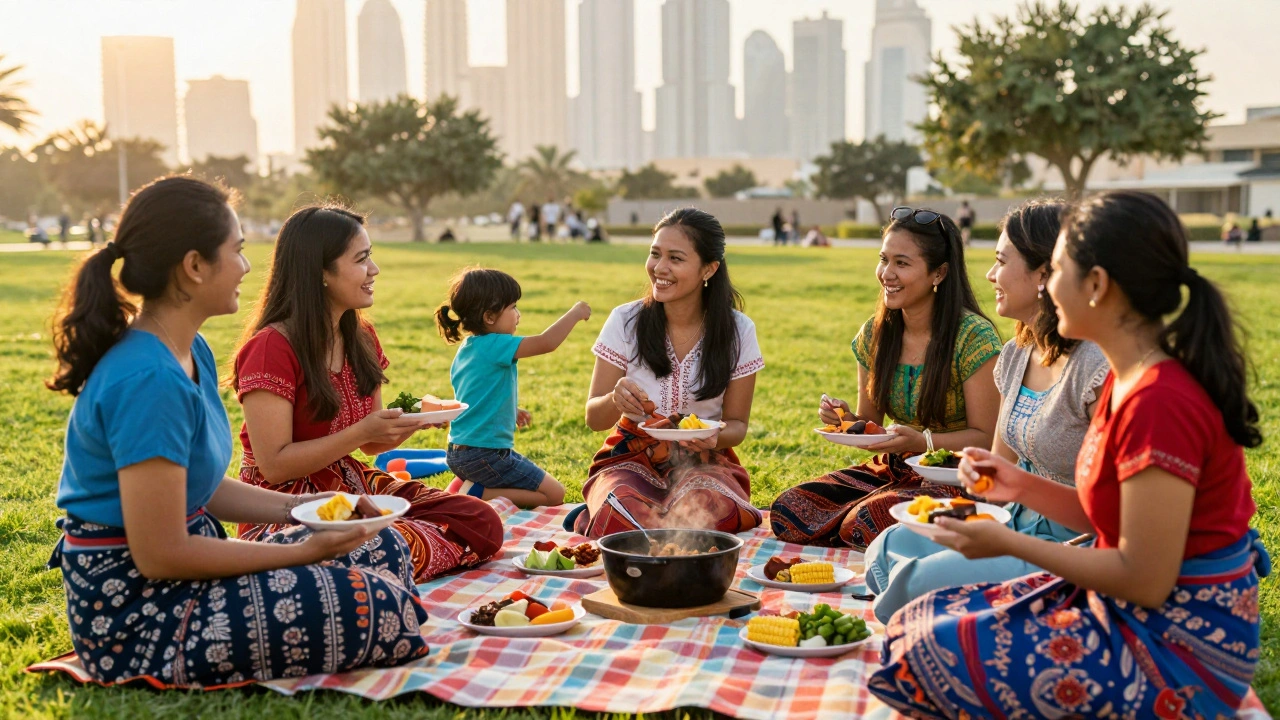
Dubai isn’t just a workplace. It’s a home. Many Filipino women live in shared apartments in Deira, Bur Dubai, or Jumeirah Lakes Towers. Weekends aren’t just about rest-they’re about community. You’ll find them gathering in parks on Friday afternoons, cooking adobo in small kitchens, or watching live performances by Filipino bands in local bars.
There are over 30 Filipino churches in Dubai, from Catholic masses in St. Mary’s Cathedral to evangelical services in Al Barsha. On Christmas Eve, thousands gather for Simbang Gabi, a traditional dawn mass that’s been carried over from the Philippines. The smell of puto bumbong and bibingka fills the air. It’s not just religion-it’s identity.
Facebook groups like "Filipinas in Dubai" and "Pinay Professionals UAE" have over 100,000 members. They share job leads, legal advice, and emotional support. Need help filing a labor complaint? Someone will reply within hours. Looking for a tutor for your child? There’s a group of certified teachers ready to help. This isn’t just networking. It’s survival.
Challenges They Face
Life isn’t easy. The kafala system-where employers control visas-still puts workers at risk. Some face unpaid wages, excessive hours, or poor living conditions. The 2022 UAE labor reforms improved things: minimum wage rules, mandatory rest days, and the ability to change employers without permission. But enforcement is uneven.
Language barriers matter too. Not every Filipino woman speaks Arabic or advanced English. That makes navigating bureaucracy harder. A simple contract dispute can turn into months of stress if you don’t have someone to translate or advocate for you.
Social stigma is another quiet burden. Some locals assume all Filipina women are domestic workers-or worse. A 2023 survey by the Philippine Embassy found that 42% of Filipino women in Dubai have experienced discrimination based on nationality or gender. That doesn’t mean they give up. It means they fight back-with dignity.
Culture in Motion
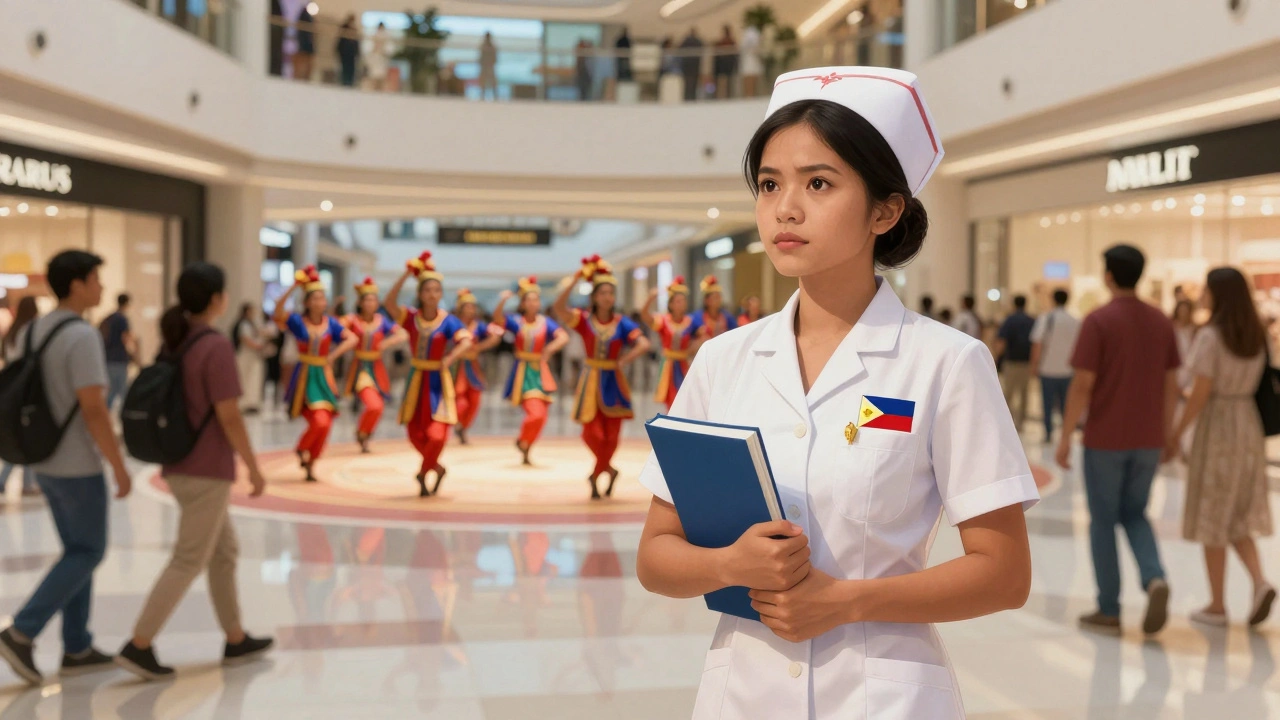
Filipino women in Dubai don’t just adapt-they influence. You’ll find Filipino cuisine in food trucks near Dubai Internet City. Pop-up karaoke nights in Al Quoz draw crowds of all nationalities. Local artists like Maria Santos, a painter from Cebu, have exhibited at the Dubai Art Fair. A Filipino dance troupe, "Dance with the Philippines," performs at corporate events and school festivals.
Even fashion has changed. Traditional Filipino attire like the baro’t saya is now seen at weddings and cultural festivals across the city. Younger women wear it with modern twists-shorter hemlines, bold prints-turning heritage into style.
And then there’s the language. Tagalog is now one of the most commonly heard languages in Dubai’s public transport hubs. You’ll hear it in the metro, at the airport, in shopping malls. It’s not just communication. It’s presence.
Education and the Next Generation
More Filipino mothers are prioritizing education-not just for themselves, but for their children. Dubai has three Filipino international schools, including the Philippine School Dubai, which serves over 2,000 students. The curriculum follows the Philippine system, but with added English and Arabic modules.
Many teenage girls born in Dubai are now studying at universities in the UAE. Some are majoring in nursing, business, or engineering. A growing number are starting businesses: a beauty salon in Discovery Gardens, a food delivery service for Filipino meals in Sheikh Zayed Road, a social media agency helping other expats build their brands.
These aren’t just "girls in Dubai." They’re future leaders.

What’s Next?
The next chapter for Filipino women in Dubai is about empowerment, not just employment. The Philippine Embassy runs monthly workshops on financial literacy, mental health, and legal rights. NGOs like the Philippine Women’s Association of Dubai offer free counseling and career coaching.
More women are applying for long-term residency visas under the new golden visa program. Some qualify through investment. Others through professional achievements-like a nurse who published research in a UAE medical journal, or a teacher who trained 500 local staff in early childhood education.
Dubai doesn’t just need their labor. It needs their voices.
Real Stories, Not Stereotypes
Meet Liza, 34, from Tarlac. She came to Dubai as a housekeeper in 2016. Today, she runs a small catering business that supplies meals to 20 Filipino families every week. She hired two other women from her hometown. Her son is in Grade 6 at the Philippine School. He speaks Tagalog, English, and Arabic.
Then there’s Aileen, 28, from Davao. She studied nursing in Manila, then moved to Dubai in 2020. She works in a private hospital, but at night, she tutors Filipino kids in math. She’s saving to go back to school for a master’s in healthcare management.
These aren’t exceptions. They’re the norm.
The story of Philippine girls in Dubai isn’t about being seen. It’s about being heard. Not as workers. Not as stereotypes. But as people building lives, families, and futures-on their own terms.
Are Filipino women in Dubai only domestic workers?
No. While many start in domestic roles due to demand and opportunity, Filipino women in Dubai now work across sectors: healthcare, education, retail, hospitality, tech, and entrepreneurship. Over 30% hold professional licenses, and thousands are students or business owners.
Is it safe for Filipino women to live in Dubai?
Yes, Dubai is one of the safest cities in the world for women, regardless of nationality. The crime rate is low, public spaces are well-lit, and law enforcement is responsive. However, cultural misunderstandings and workplace exploitation can occur. Most Filipino women rely on community networks for support and advice.
How do Filipino women in Dubai stay connected to their culture?
Through churches, community centers, Filipino festivals, social media groups, and home cooking. Events like Philippine Independence Day on June 12 draw thousands. Families celebrate birthdays with pancit and lechon. Children learn Tagalog at home and in weekend language classes.
Can Filipino women become permanent residents in Dubai?
Yes. Since 2022, the UAE offers long-term visas for professionals, investors, and exceptional talents. Filipino nurses, teachers, and entrepreneurs who meet income or qualification thresholds can now apply for 5- or 10-year residency without needing a local sponsor.
Do Filipino women in Dubai face discrimination?
Some do. Stereotypes about domestic work or assumptions about their background still exist. But community organizations, legal aid groups, and the Philippine Embassy actively push back. Many women now speak out publicly, write blogs, and lead workshops to change perceptions.