When people hear "Arabic girls in Dubai," they often imagine stereotypes-veiled figures, silent obedience, or exoticized images from movies. But the reality is far more layered, vibrant, and full of quiet strength. Arabic girls in Dubai aren’t just a demographic; they’re students, entrepreneurs, engineers, artists, athletes, and mothers shaping the city’s future every day. This isn’t about appearances. It’s about identity, choice, and how tradition and modernity live side by side in one of the world’s most dynamic cities.
Who Are Arabic Girls in Dubai?
"Arabic girls in Dubai" mostly refers to Emirati women-citizens of the United Arab Emirates whose families have lived here for generations. They’re not immigrants. They’re not tourists. They’re the backbone of a society that’s changing faster than most places on earth. Many were born in Dubai, raised in traditional households, and now work in tech startups, lead government projects, or run their own fashion brands. The average Emirati woman today is under 30. Over 70% of university graduates in the UAE are women. That’s not a trend. That’s a national priority. The government invests heavily in education for girls because they see it as key to the country’s long-term stability. So when you see a young Emirati woman in a designer abaya walking into a high-rise office in Downtown Dubai, she’s not defying culture-she’s expanding it.What They Wear-and Why
You’ll see everything from full black abayas to colorful embroidered ones, to women wearing jeans and headscarves with designer sunglasses. There’s no single uniform. What matters is personal choice, not enforcement. The abaya is cultural, not legal. Many Emirati women wear it because it’s comfortable, elegant, and tied to family identity. Others choose not to wear it at all, especially in private or professional settings. In malls like Dubai Mall or City Walk, you’ll spot girls in abayas scrolling through Instagram while sipping matcha lattes. They’re posting selfies from the Burj Khalifa, tagging friends in Paris, and discussing global politics. Their style blends global trends with local values. It’s not rebellion. It’s evolution.Education and Career Paths
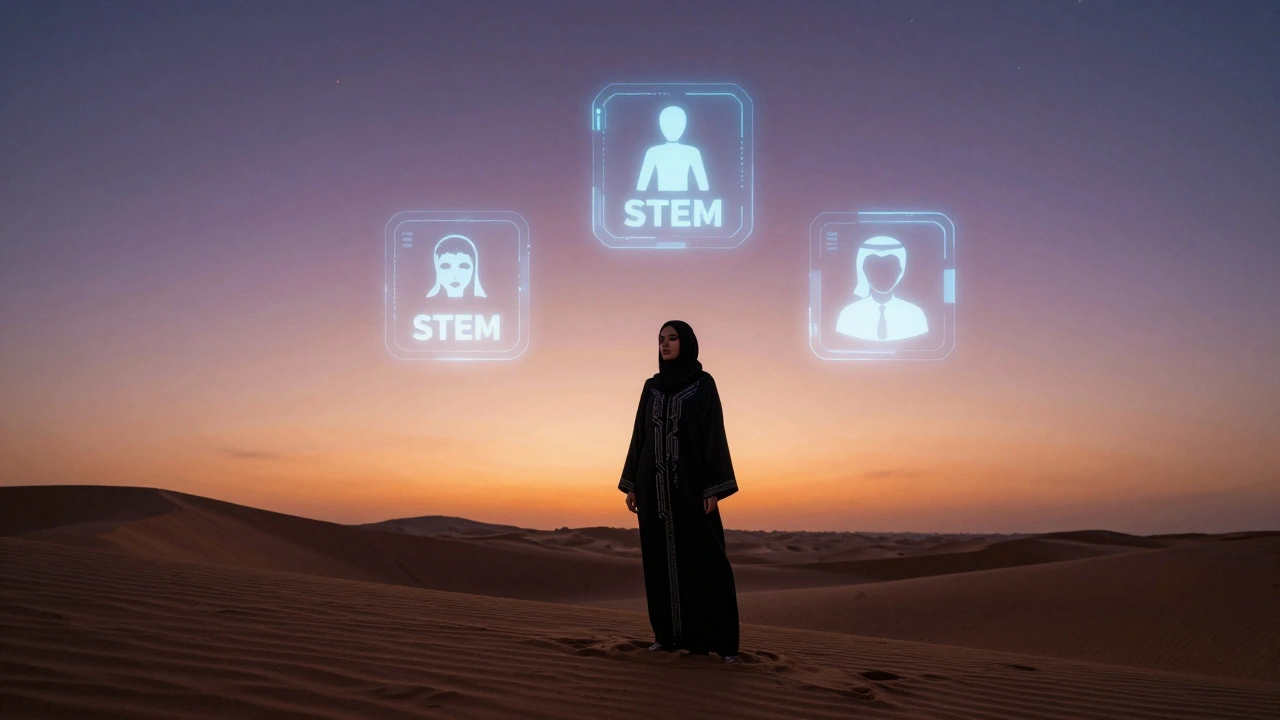
Emirati women dominate fields once dominated by men. In healthcare, over 80% of doctors in public hospitals are women. In engineering, the number of female graduates has tripled since 2015. The UAE Ministry of Education actively recruits female students into STEM programs with scholarships, mentorship, and internships tied to major companies like Dubai Electricity and Water Authority (DEWA) and Emirates NBD. One Emirati woman I spoke with, Aisha, 26, works as a data scientist for a government AI project. She studied computer science at NYU Abu Dhabi, then returned to Dubai to lead a team analyzing traffic patterns. "No one told me I couldn’t do this," she said. "They just gave me the tools and said, ‘Go.’" Women also lead in creative industries. Designers like Rasha Al Qassimi and fashion houses like Zayn Al Jassim are reshaping regional aesthetics. You’ll find their collections in boutiques across Dubai, worn by Emirati women who want to express individuality without losing cultural roots.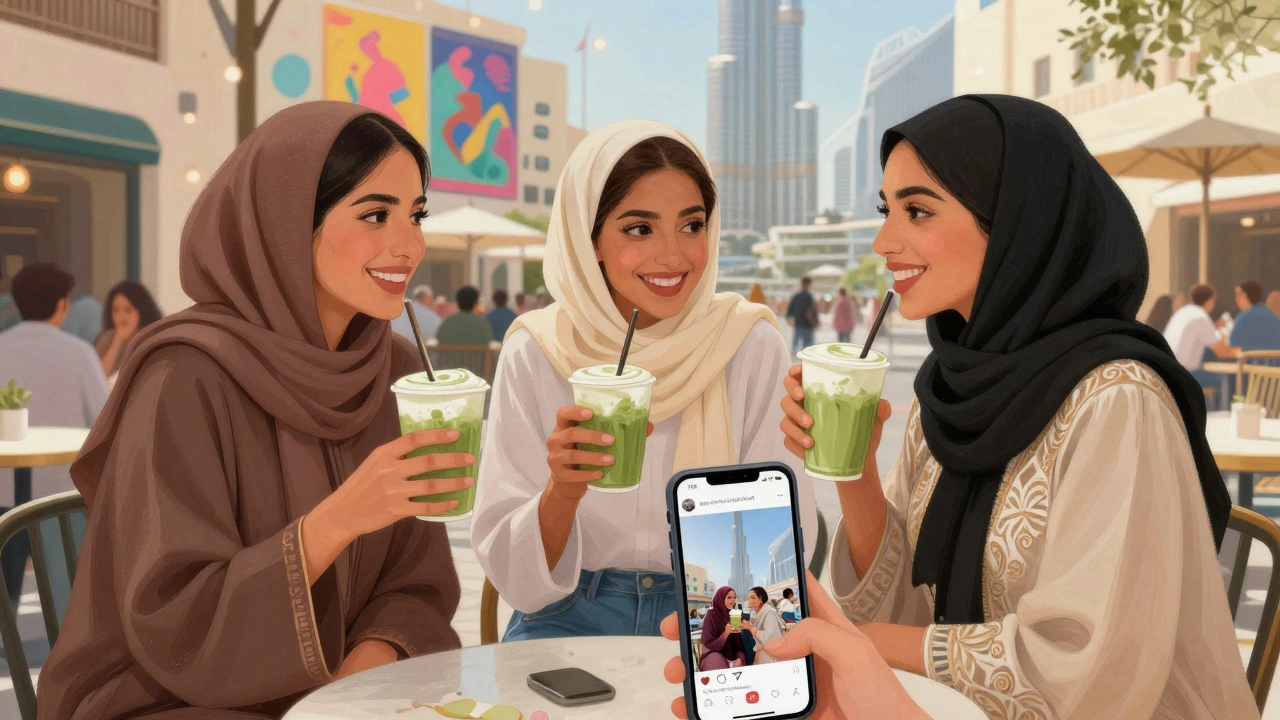
Family, Freedom, and Social Boundaries
Family remains central. Most Emirati women live with their parents until marriage, and many continue living nearby after. But that doesn’t mean they’re controlled. Many manage their own finances, travel alone, and make major life decisions without family approval. Social norms are shifting fast. Dating isn’t openly discussed, but it happens. Apps like Bumble and Tinder are used quietly. Social gatherings often mix genders in controlled environments-art openings, book clubs, fitness studios. The rules are unwritten but understood: respect, privacy, and discretion. Public behavior is guided by local customs, not strict laws. You won’t see public displays of affection, but you’ll see girls holding hands in parks, laughing loudly in cafes, or dancing at private parties. The line between tradition and personal freedom is drawn differently by every family.How They Spend Their Free Time
Weekends in Dubai aren’t about parties or clubs for most Emirati women. They’re about family, fitness, and creativity. You’ll find them at:- Yoga studios in Jumeirah Beach Residence
- Art galleries in Alserkal Avenue
- Book readings at the Dubai Public Library
- Desert safaris with friends
- Home baking sessions with cousins
The Challenges They Face
It’s not all smooth. Many Emirati women struggle with family expectations around marriage. Pressure to marry early still exists, especially in older generations. Some delay careers to meet those expectations. Others push back, choosing to focus on education first. There’s also a gap between urban and rural experiences. A girl in Al Ain might have fewer opportunities than one in Downtown Dubai. Access to mentors, internships, and networks isn’t equal. And while the government promotes gender equality, real change takes time. Workplace bias still exists in some sectors. A woman might be hired for her qualifications, but still face questions about her availability for overtime or travel because she’s a woman.What’s Next?
The future for Arabic girls in Dubai is wide open. The UAE’s National Agenda 2030 includes specific goals for women’s leadership: 30% of public sector leadership roles to be held by women by 2025. They’re already at 28%. In 2024, the UAE appointed its first female Minister of State for Artificial Intelligence. More girls are starting businesses. The Dubai Women’s Establishment supports female entrepreneurs with funding, training, and office space. Over 40% of new startups in Dubai are founded by women under 35. They’re not waiting for permission. They’re building systems, writing policies, and changing norms from the inside. And they’re doing it without fanfare-quietly, confidently, and with deep pride in who they are.Why This Matters
When you see Arabic girls in Dubai, don’t see a stereotype. See a generation rewriting the rules-not by rejecting culture, but by redefining it. They’re proof that progress doesn’t require abandoning tradition. It requires expanding it. They’re the future of the UAE. And they’re already here.Do Arabic girls in Dubai have the same rights as men?
Legally, yes. Emirati women have equal rights under UAE law to own property, start businesses, get divorced, and hold public office. In practice, social norms sometimes create barriers, especially in conservative families. But the government actively promotes gender equality through education, quotas in leadership, and public campaigns. Many Emirati women now hold high-ranking positions in government, healthcare, and tech.
Are Arabic girls in Dubai forced to wear the abaya?
No. The abaya is a cultural choice, not a legal requirement. While many Emirati women wear it out of tradition, personal preference, or family expectations, others choose not to. In workplaces, universities, and private spaces, clothing is largely flexible. Tourists and expats are asked to dress modestly in public areas, but Emirati women have full freedom to choose what they wear.
Can Arabic girls in Dubai travel alone?
Absolutely. Many Emirati women travel alone for education, work, or leisure. Dubai is one of the safest cities in the world for solo female travelers, and Emirati women frequently fly to Europe, Asia, and North America without accompaniment. Some families prefer they travel with a group, but there’s no legal or social rule preventing solo travel.
Do Arabic girls in Dubai work outside the home?
Yes, and they’re doing it in record numbers. Over 60% of Emirati women are in the workforce, and that number is rising. They work in fields like medicine, engineering, law, tech, education, and even space science. The UAE government has created programs to encourage female participation, including childcare support, flexible hours, and leadership training.
Are Arabic girls in Dubai allowed to date?
Dating isn’t openly discussed in public, but it happens. Many Emirati women meet partners through family connections, university, or private social circles. Apps like Bumble and Tinder are used discreetly. Relationships are often kept private until serious. Public displays of affection are avoided out of cultural respect, not legal fear.